
Written by Majkol Robuschi on 25 Feb 2026
Distributor Koei Tecmo • Price £28.99
For some time now, Koei Tecmo’s commitment to modernizing and revitalizing its legacy IPs has begun to pay off, rewarding the company with a steady output of high-profile releases. Without revisiting earlier experiments and divisive attempts such as Atelier Firis’ open-world shift or the controversial Dynasty Warriors 9, the Dead or Alive publisher, itself recently confirmed to be on track for a return, has had reason to celebrate. Strong sales for Nioh 3 and the opportunity to honor the long-standing legacy of the Atelier series with Atelier Yumia: The Alchemist of Memories & the Envisioned Land, a chapter clearly influenced by recent gacha-driven sensations, have highlighted a renewed creative momentum. Striking a balance between tradition and TikTok-era trends, the Japanese publisher’s recent output makes its intentions clear: delivering increasingly sophisticated games from a technical standpoint, capable of breathing new life into a rich portfolio of intellectual properties in need of fresh energy.
This was also the case with Dynasty Warriors Origins, a spin-off of the Musou series that placed players in the role of a mysterious warrior amid the conflict of the Three Kingdoms, the 14th-century Chinese novel that has long inspired the events depicted in Koei Tecmo’s games. Backed by a highly polished technical presentation and a reworked structure designed to make room for a more intimate and solemn adventure, Dynasty Warriors Origins marked a resurgence for the series in terms of popularity and critical appreciation, particularly in Western markets that have traditionally shown greater interest in Musou-style tie-ins such as Hyrule Warriors.
The series’ strengths were distilled into a single chapter that successfully fused the most compelling elements of its past combat systems. This includes the return of duels reminiscent of Dynasty Warriors 4, a parry system not unlike that of the fifth entry, and ideas reclaimed from more recent installments. Among these are the reintroduction of dodging for unblockable attacks from Dynasty Warriors 9 and a renewed focus on spectacle, capable of recreating the sense of awe first experienced at the dawn of the PlayStation 2 era with Dynasty Warriors 2, when dozens of enemies could be sent flying by a well-timed sweep and rendered fully in real time.
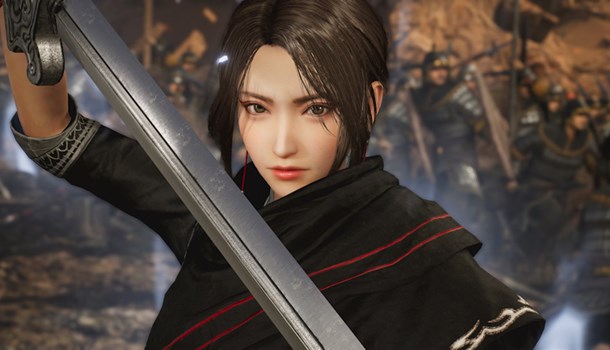
In this context, the recent paid DLC Visions of Four Heroes delivers a solid dose of additional content for those who appreciated the results of Omega Force’s recent efforts. At its core, it consists of “what if” scenarios similar to those seen in past entries, adding new battles, gameplay variations, and weapons for the game’s mysterious protagonist, the Wanderer. Each playable episode is unlocked through specific events encountered during the main campaign and exists largely independently from its progression, functioning almost like a separate mode. By accessing the inn screen available in every major settlement, players can check whether one of the four scenarios has been unlocked and dive into chapters that feel, in many ways, apocryphal within the broader narrative of Dynasty Warriors Origins.
.png)
Unsurprisingly, the narrative framework mirrors that of the main adventure. The Wanderer continues his search for the hero destined to bring peace to ancient China, and in these scenarios, that role is embodied by the protagonists themselves. The episodes explore the ambitions and motivations of four heroic warriors bound together by a cruel fate. In this respect, the experience remains highly consistent with what the base game offered, relying on lengthy cutscenes and dialogue-heavy sequences to add depth to characters who were previously known primarily as villains.
Visions of Four Heroes also introduces two new weapon types, both usable in the main campaign as well: the bow and the rope dart. Earned as battle rewards or by defeating enemy generals, these weapons add welcome variety to combat encounters and enable striking new choreographies that showcase the Wanderer’s skills from a different perspective. Beyond this, however, they represent the only substantial gameplay additions. The new scenarios follow a largely linear progression, do not expand the world map with new events, and while the developers have introduced a new mechanic called Strategic Battle, it ultimately falls short of expectations. In theory, this system was meant to add a more tactical layer to large-scale engagements by allowing players to use abilities on the world map alongside turn-based encounters with fielded generals, thinning enemy forces ahead of major clashes. In practice, the experience is balanced so heavily in the player’s favor that these mechanics can be almost entirely ignored without facing meaningful consequences.
.png)
It is easy to see Strategic Battle as a proof of concept for future iterations, perhaps in a sequel, but during my time with the DLC it failed to leave a strong impression. The decision to introduce a progression system separate from the main campaign, on the other hand, is a welcome one. New skill trees can be completed within these scenarios without affecting the balance of the original experience. As a result, Dynasty Warriors Origins: Visions of Four Heroes stands as the most complete version of Dynasty Warriors Origins currently available, enriching progression with some of the most demanding and technically engaging battles the game has offered so far.
From this perspective, the inclusion of true “secret final boss” scenarios comes as no surprise, especially when facing familiar figures beloved by longtime fans, such as the legendary pairing of Diao Chan and Lu Bu. The DLC is clearly aimed first and foremost at enthusiasts of the heroic universe born from the pages of Romance of the Three Kingdoms, particularly given the care taken to deepen character portrayals and reveal sides of them rarely explored before. This is especially evident in the intimate, almost romantic tone that Origins adopts across its narrative content. That said, the purely gameplay-driven additions are more than sufficient to justify the package, offering over twenty hours of extra content through additional challenges in the new training grounds and the straightforward enjoyment of the what-if scenarios.

Majkol (aka Zaru) is an Italian queer writer (he/him – they/them) who has been immersed in the world of video game journalism for almost two decades. With a deep-seated love for anime and manga shaping his tastes and passion, he brings a blend of critical insight and heartfelt enthusiasm to his work, celebrating stories that challenge norms and embrace diversity. Find him on his blog, Also sprach zaru_thustra.
posted by Ross Locksley on 23 Feb 2026

posted by Ross Locksley on 20 Feb 2026

posted by Eoghan O'Connell on 19 Feb 2026

posted by Jared T. Hooper on 17 Feb 2026
posted by Ross Locksley on 11 Feb 2026

posted by Jared T. Hooper on 06 Feb 2026
posted by Eoghan O'Connell on 04 Feb 2026
posted by Ross Locksley on 03 Feb 2026