
Written by Richard Durrance on 27 Jan 2026
Distributor Third Window • Certificate 18 • Price £54.99 (Angel Guts Collection)
So we step our delicate way into the second film of Third Window’s Angel Guts Collection, simply named Angel Guts: Nami, again based on Takashi Ishii’s manga. This time it's directed by Noboru Tanaka, responsible for Watcher in the Attic (currently available from 88 Films) and A Woman Called Sada Abe (previously released by HB Films in not the best print many, many years ago – or so it feels).
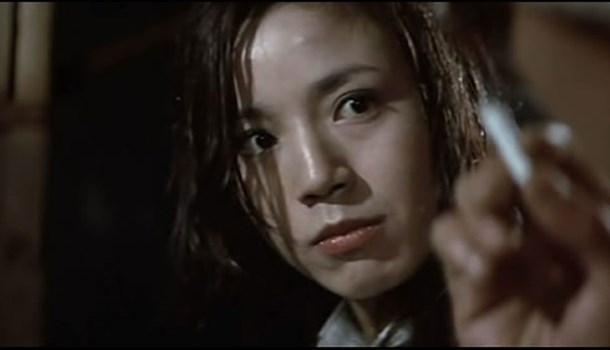
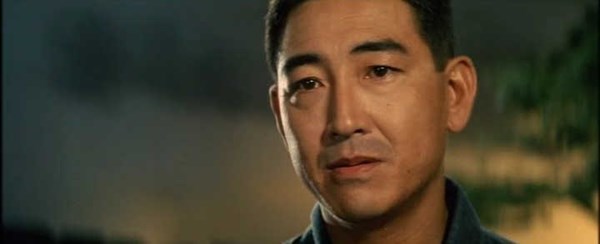
Rookie reporter, Nami (Eri Kanuma) has her first big assignment, a report on women who have been raped and the consequences of the act on the victims. Becoming obsessed, Nami loses all objectivity while becoming close to ex-highflying editor, now porn magazine proprietor, Muraki (Takeo Chii).
Angel Guts: Nami, like the first film in the set: Red Classroom, is a remarkable film, again for what it often is not. Yes, this was also was made as a Roman Porno but manages to shred much of the genre because right from the start it shows its hand and in doing so, it shows that it is not there to create a leering sexual narrative.
It’s worth stopping here to be clear that as I've noted in many reviews, there's a depressing wearisomeness to rape being used as sexual objectification. That’s an understatement, and sometimes lacking in complexity, I realise, but too often it’s used as a way to push a narrative into action or as an excuse to cram nudity on the screen – and that’s not even getting into some aspects offensive in the suggestion that almost all men are intrinsic rapists. But the very fact that rape is the very centre of a Roman Porno then immediately raises all manner of alarm bells. Too many, arguably but what you see straight off is that the first rape is not seen – and those we do see are not used as sexualised acts. If anything the great violation of the women who are rape victims is by Nami and her cadre of photographers who hound women to get their story. Their utter lack of empathy while claiming to try and understand the consequences of sexual assault is told with quiet empathy by the film. Especially one young woman, whose life we see only in passing, is violated and disturbed as much by Nami as she is her attackers. It’s thoroughly understandable, as her home is violated by these people who chase at her if she tries and leaves her home. Also, when we see her attackers in flashback, how this is shown is akin to A Clockwork Orange, where it is not about titillation at all, but the shocking awfulness of the assault upon her. Often the camera is either very close to see her distress or kept far away, refusing to allow us to see any detail, while also presenting what’s occurring in as objective a manner as possible
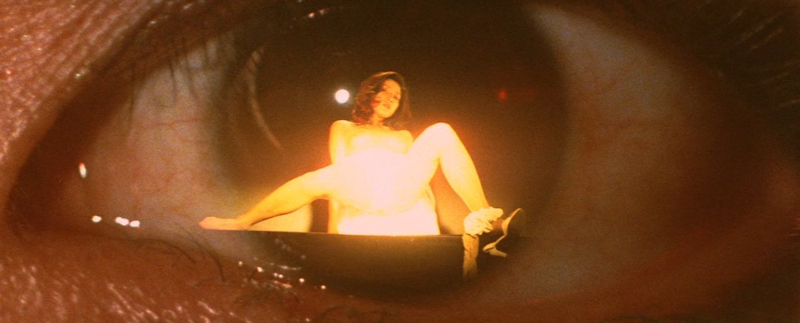
Though the focus on the women that Nami interviews is what has happened to them in the past, the film is about the reality of the lives they are living now, whether that is the woman that relives aspects of her past in a sex show (made more complex by the man involved being gay and also claims to having been raped – I say "claims" as this is one attack that the story never makes clear if it happened or not, not that we have reason to distrust him) or the young woman with the daughter distressed by Nami’s desire to hear her story. There is perhaps an irony that Muraki, now working for a porn mag, has far more sensitivity than Nami. Nami seems quite tone deaf to the damage that she is doing, whereas Muraki has been there already, having spoken to women in the same situation but been unable to publish anything because he cannot form the words. Whereas Nami often forms a false truth in what she writes, describing a catharsis that the people she meets that they do not feel. Though they find a way to live their lives, even if appearing outwardly normal, they are still deeply traumatized by their experiences.
Nami in contrast finds herself instead turned on by imagined stories of what has happened to the women she talks to. Though initially objective, these events when retold causes her damage, whether she realises it or not. Equally, those she works with lack sensitivity. Her editor is only interested in the next story, the next piece of her journalism, without concern for the women Nami is seeking out, or for Nami herself. Muraki, though, sees things more clearly and in this guise seems one of the most sympathetic aspects of his character, recognising the damage to Nami, and also the actual physical risk to her. Muraki is the character that sees with clarity, the scales fallen from his eyes; Nami though is similarly like her namesake in Red Classroom, starting to spiral here, but the spiral is firstly spiritual and then mental; her work finally catches up with her, unleashing fresh horrors which come from an unexpected, but in terms of the narrative, very understandable source. There's something deeply expressive in Eri Kanuma's performance as Nami, in illustrating her descent, which lingers after watching the film. Much of it comes from Kanuma's expressions, there's an intensity in there that seems to radiate from the inside out in her characterisation that brings Nami to life.
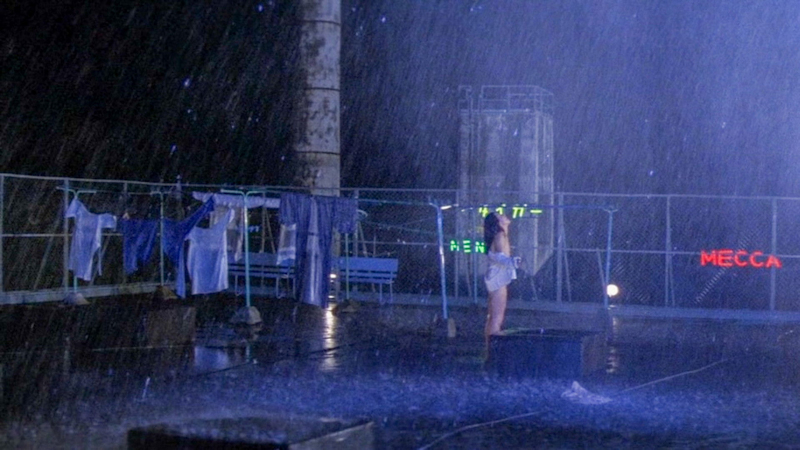
Stepping back from the narrative there is also plenty of style. Tanaka worked with Imamura and Suzuki, and there are moments where he seems to have learned Suzuki’s brilliance for silence: water dropping silently in slow motion interrupting the tumult of emotions, a truly stunning image and also perhaps harking back to the sex act one of the victims enacts night after night, where both she and her attacker, surrounded by men on stage, are soaked in water. But mostly you would argue it's the tone of the film that Tanaki gets right, the sense of moral complexity; again, like Red Classroom, the film provides no easy answers. True, if anything Nami is at times the villain of the story, as shown once when witnessing a harassed survivor being attacked, finds the woman’s life is not what Nami imagines and does nothing to help but witnesses and watches. As awful as some of the men we meet in passing are, she feels herself the crusader when she is bringing pain to those she meets. Muraki on the other hand would help steer her away from this but by the time he’s met Nami, she has already started to walk down a dark path from which she cannot seem to return.
For viewers willing to be challenged and hypnotised by a story that could seem crude or vulgar, Angel Guts: Nami again walks the finest of lines. Though there are aspects of exploitation it rarely comes to the fore in the way that it does in many films and focusses on the emotions of its characters, the impact of events upon them; the film sometimes explicitly defines what the women's lives that we meet are like but sometimes it’s hinted at in passing. The first young woman, hounded by Nami and her colleagues, is suggested to be a happily married mother, but nothing more than the tone of a stray moment of offscreen language is enough to suggest she’s not found any peace.
Such is the nature of Angel Guts: Nami. Not an easy film. Not a comfortable film. But not an exploitative film. Not having read Ishii’s manga it would be interesting to know how much comes from his source material, especially as the director in the film uses Ishii’s images directly, and these are sympathetic and often elegant. True, some parts of the film do not entirely work - the explanation as to what has happened to Muraki’s wife feels lazy and borders on the misogynistic, but the overarching film is one that pushes what the genre can do. Like Red Classroom this will not be everyone's cup of saki, but definitely one of the most fascinating, skilful and disturbing (in a good way) films you are likely to witness.

Long-time anime dilettante and general lover of cinema. Obsessive re-watcher of 'stuff'. Has issues with dubs. Will go off on tangents about other things that no one else cares about but is sadly passionate about. (Also, parentheses come as standard.) Looks curiously like Jo Shishido, hamster cheeks and all.

posted by Richard Durrance on 19 Jan 2026
posted by Richard Durrance on 08 Jan 2026
posted by Richard Durrance on 17 Dec 2025
posted by Richard Durrance on 12 Dec 2025
posted by Ross Locksley on 09 Dec 2025
posted by Richard Durrance on 28 Nov 2025
posted by Richard Durrance on 25 Nov 2025

posted by Richard Durrance on 18 Nov 2025