
Written by Richard Durrance on 12 Dec 2025
Distributor 88 Films • Certificate 18 • Price £17
Time to return to the 88 Films "Japanarchy" selection, with Three Outlaw Samurai director, Hideo Gosha’s 1986 Yakuza Wives. We’re in the 1980’s so we should expect big hair, bigger shoulder pads and bigger... orbs.
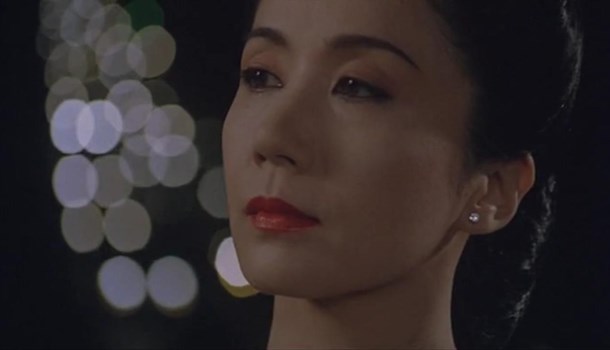
With her husband in prison, Tamaki (Shima Iwashita) sits as the Elder Sister, heading up her family, while her young sister, Makoto (Rino Katase) works in a bar and looks after their ailing father. Then as the head of the syndicate Tamaki’s family is associated with dies, warfare erupts between families, with rival Koiso (Mikio Narita) sending out of towner, Sugita (Masanori Sera) to assassinate the new head of the syndicate. Sugita though has his eye on Makoto, setting sister against sister.
Like a great many yakzua movies Yakuza Wives has a lot of plot. With all the families that appear, the rivalries, the violence etc. it's easy at times to slightly lose track of who people are, their allegiances, etc. But as with the best this is no reason to be put off because at the heart of it are the relationships. As the film started though my mind was more on the yakuza and the women they are in relationships with. Often we see them in passing, the younger woman whose lifestyle is paid for by the older yakzua, the girlfriend whose existence seems to be there to highlight the yazkua’s connection to the masculine world. Rare then you see the wives of yakuza on film in detail: previously we had the slightly Lady Macbeth manipulative wife of the equally manipulative boss in the Battles Without Honour and Humanity series; Big Time Gambling Boss gives us perhaps one of the more insightful marriages, where the wife understands and lives her own yakuza code; or else the sleezy yakuza’s abused common law wife brought together by hell, living a hell, in Graveyard of Honour. So when we enter the world of Yakuza Wives, in a shining bar, the wives of imprisoned yakuza partying hard, drinking hard, it would be easy to see them as just a gender flip and for a while the film could take that angle, but it never does.
In part this may be because the screenplay is based on a book by Shoko Ieda, who had gotten to know those in relationships with yakuza - their wives and girlfriends, so in this sense is a little like Battles with Honour and Humanity in how there’s some basis in reality. That said we are in the 1980’s so there is definitely big hair, loud patterned clothes and the sharp suits of the era. The film has a glossiness to it that you would expect of a well-budgeted film. Tamaki has her own girl-cave in her home, for instance, but it’s also an interesting aside because for all that she has to assume certain masculine trappings for her dealings with yakuza, as the Elder Sister, her maintenance of an area that is her own, that is personal to her and (even if a bit cliche) feminine, evokes the side of her that is not trying to ape men; she has a foot in two worlds but is also a loving, proud wife, if from a distance due to her husband’s incarceration. But this too matters; she is married to a yakuza and as such has apparently not subsumed herself into its world but embraced it. Yet as the film unfolds, you realise that though this is the case it’s not something she wants as a norm. Tamaki’s attempt to marry her younger sister Makoto off early in the film, is brash, heedless of Makoto’s desires, and likely an act of protection: taking her sister away from the world that Tamaki now lives and thrives in. She does it though as a yakuza might, there is no asking, it is all command, all under Tamaki's direction.
Problematic then that the out of town yakuza, Sugita likes Makoto and their relationship is one where the less salutary nature of the yakuza rears its head in the film; Sugita rapes and forces Makoto into marriage, in one of the more bizarre marriage ceremonies you’ll see on film. From here you feel Makoto’s character turning, adjusting itself so that as Sugita tells her he loves her, she says the same and you suspect both mean it. They mean it because both characters are trapped: Sugita because of the metaphorical price on his head; Makoto with a man who is violent and may well be telling the truth when he says he'll kill her if she does not stay with him. Are we witnessing here what may have happened to Tamaki in Makoto’s relationship with Sugita?
Returning to where the film starts, in the Yakuza Wives Club where the yakuza are fighting, suddenly there is not the sense of exploding drunken excess because the reality of a yakuza war, one in which Tamaki is one of the major players, has suddenly affected the women there. There's a sense that those with husbands in prison are the lucky ones, as we are introduced to women who were yakzua wives but now yakuza widows. Yes, their families will be looked after financially, but their lives have been altered. We see this only in passing, but what is more chilling perhaps is as they discuss this, Tamaki sits there at the centre of it all, emotionally impassive.
Apparently, the success of the film spawned fifteen sequels. Yes, you read that correctly. I cannot imagine how but there you go. There are bouts of yakuza violence, but heart of the film is our two sisters and their troubled relationship, as well as the impact of men on their lives. Yet the film offers no judgement on the nature of these lives, it simply allows the fates of all involved to play out. There are times where Tamaki can come across as a gender-flipped character, but then we recognise that as a necessary part of the role her character is playing; she is still a unique individual, as is Makoto, though her life is perhaps the most upended, and her arc is one that could certainly carry over into later films.
Very successful in its time, Yakuza Wives is slick, entertaining, sometimes disturbing and willing to show the effect of violence on women in all of its varieties and that’s something that in itself is quite rare. 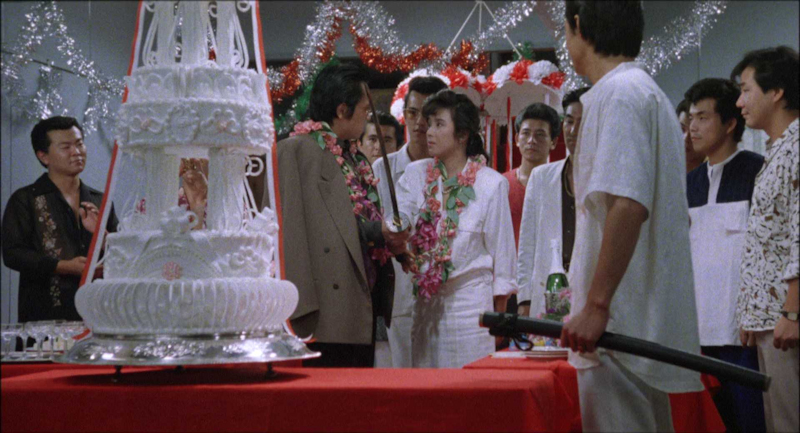

Long-time anime dilettante and general lover of cinema. Obsessive re-watcher of 'stuff'. Has issues with dubs. Will go off on tangents about other things that no one else cares about but is sadly passionate about. (Also, parentheses come as standard.) Looks curiously like Jo Shishido, hamster cheeks and all.
posted by Richard Durrance on 27 Jan 2026
posted by Richard Durrance on 19 Jan 2026
posted by Richard Durrance on 08 Jan 2026
posted by Richard Durrance on 17 Dec 2025
posted by Ross Locksley on 09 Dec 2025
posted by Richard Durrance on 28 Nov 2025
posted by Richard Durrance on 25 Nov 2025

posted by Richard Durrance on 18 Nov 2025