
Written by Richard Durrance on 02 Mar 2026
Distributor Third Window • Certificate 18 • Price
So we get to the final film of the Angel Guts Collection – Angel Guts: Red Vertigo. Well, actually not the final film per se, as Third Window included Red Flash as an extra, but as that was originally included in the 4 Tales of Nami boxset, it’s covered. So Takashi Ishii’s written and directed (his first film as director) Red Vertigo closes the set out.
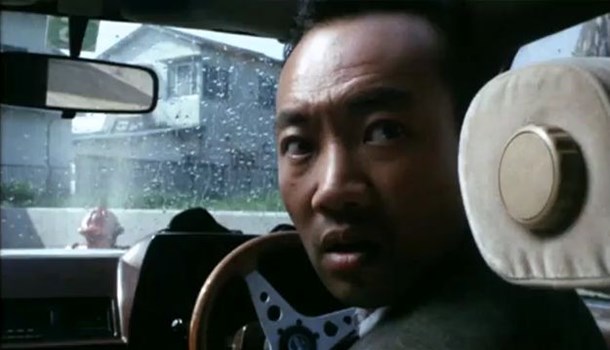
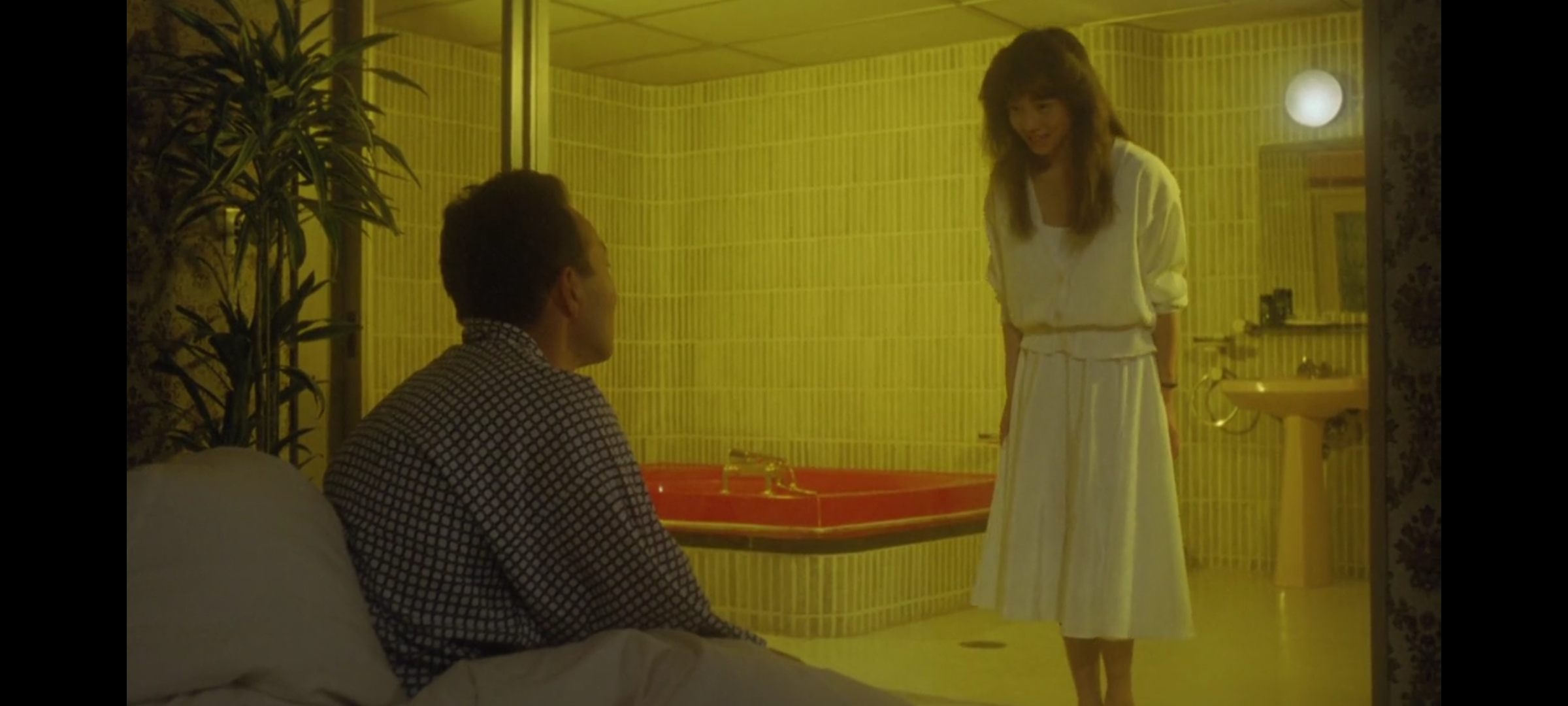
In the same night, nurse Nami (Mayako Katsuragi) finds herself attacked by her patients, finds her boyfriend sleeping with the woman he’s photographing and is then hit by a car driven by Muraki (Naoto Takenaka) who kidnaps her. Muraki has been discovered embezzling money and threatened by those suing him. Can Nami and Muraki, despite their questionable introduction, find some solace together?
Ishii’s directorial debut has something of a queasy intensity about it. Like all of the films in the set it is not an easy one, but it's also a film with more of a purpose to it, unlike Red Porno. Both of our protagonists are damaged people, both recently so: Nami is wronged by men she either trusts or are in her care; she is, perhaps ironically, very trusting: her boyfriend takes pornographic photographs (she even helps him develop them) but he’s not worthy of it. Muraki’s character is, I suspect, a critique of the economic bubble - he’s the successful stockbroker willing to take risks for other people, while taking one too many for his own sake. He’s angry because he’s made people wealthy and cannot see why he cannot have a slice of the cake. There are aspects of Muraki’s anger and his frustration that feel very real because it’s grounded in an anger at how capitalism can often reward those with money without any sense of fairness, but moreover his character is, like so many in the Angel Guts series, in a downward spiral and indiscriminately lashing out, which is how he finds himself with Nami.
Nami's incarnation here is interesting because she is partly broken but seems always to be fighting and trying to find a way to survive. Even when attacked it feels like she is fighting back. It gives her a sense of purpose, unlike those films where such scenes are little more than an excuse for nudity and unpleasant leering sexualisation. In these moments Ishii doesn’t go for flesh but instead shows us the fight, in all its unholy awfulness. Again, much of why the film works is tonal.
This is very much the end of the run for Roman Porno; although there is significant sex and nudity, the film never lingers on it – except one scene and that has a reason – and tends to focus on flesh where it reflects the emotions of our characters. The most prolonged series of sexual images are the moments where Nami and Muraki feel an emotional attachment, even if this is in the extremity of desperation. Ironically perhaps these are the minutes of the film where you wonder if it has perhaps run out of steam, then it finds its feet again by returning to our two protagonists and is often due to elements of chance entering into the story and taking a big chunk out of their lives.
Considering this is his first film as director, Ishii’s work is very assured – his use of sets and visuals within them (who doesn’t love some neon?) seems natural to him and he demonstrates some mastery of the camera. He seems very much at home directing the image and developing his characters. Equally his actors seem comfortable with him, especially I felt Naoto Takenaka as Muraki (who some might recall from A Night in Nude), who has a real skill for playing men who are often on the skids. He has a stillness to him that says more than a trolley full of emoting. His extremes of emotion feel grounded in reality: the complexity of his emotions, especially those where he seems to be trying to explain away his worse actions could feel false, but Takenaka makes you understand who this character is, allows you to see the layers that are there, the frustration, the anger, his sense of smallness and how he knows he’s fucked up but cannot admit to his own stupidity and also why he is so very, very desperate. This element of thoroughly exploring its character's motivations is a strength of the Angel Guts films and really comes to the fore with Muraki. A little less so perhaps with Nami, though her strength of character and ability to fight instead of playing the victim should be lauded, as it could have been played very differently, as is often the case in this specific genre.
And so our Angel Guts journey comes to an end. True the first film in the series, High School Co-Ed, was not included but that’s no reason to say no to this Angel Guts collection. If anything saying yes is the answer. Why? Because these films are of their time but in the best possible way, because though not always easy they are willing to lay bare complexities that we are too often not able to engage with. Yes, they are made as sex films, but working within genre constraints, taking apart the conventions and creating something that transcends the base reality of what is being asked can result in genuinely evocative cinema. The word “porno” sets eyes rolling, assumptions are likely to be made and often with good reason. But Angel Guts challenges and expands the genre without falling foul of its pitfalls. Those with open minds will appreciate that the Angel Guts films should be in your collection.

Long-time anime dilettante and general lover of cinema. Obsessive re-watcher of 'stuff'. Has issues with dubs. Will go off on tangents about other things that no one else cares about but is sadly passionate about. (Also, parentheses come as standard.) Looks curiously like Jo Shishido, hamster cheeks and all.
posted by Richard Durrance on 25 Feb 2026
posted by Richard Durrance on 12 Feb 2026

posted by Richard Durrance on 10 Feb 2026
posted by Richard Durrance on 07 Feb 2026
posted by Richard Durrance on 03 Feb 2026

posted by Richard Durrance on 27 Jan 2026
posted by Richard Durrance on 19 Jan 2026
posted by Richard Durrance on 08 Jan 2026